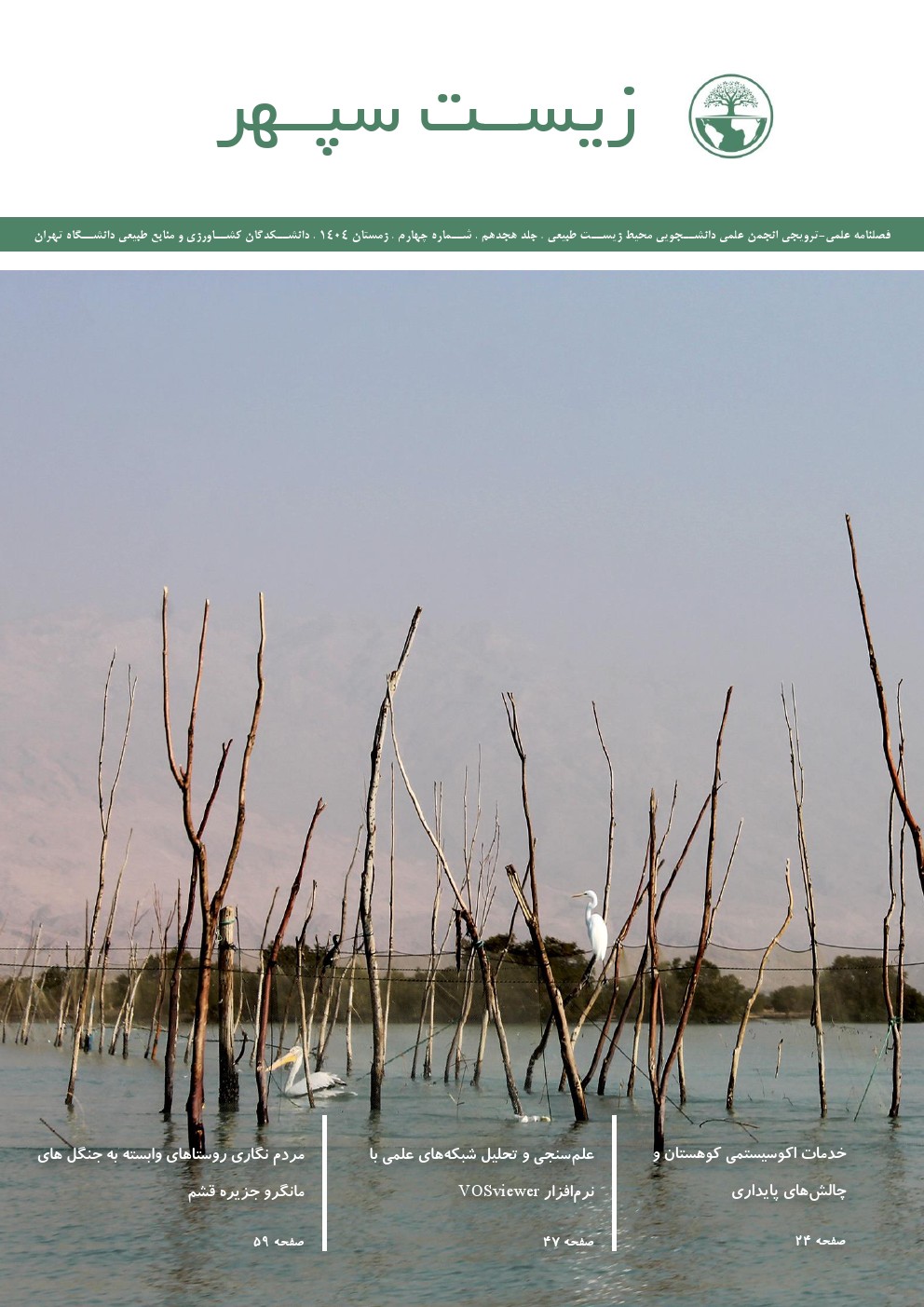
نوع مقاله : مقاله پژوهشی
عنوان مقاله English
نویسندگان English
This study aimed to investigate the socio-economic and demographic characteristics of villages adjacent to the mangrove forests in the northwestern part of Qeshm Island, and the role of local communities in the conservation and sustainable use of these forests' ecosystem services. Using an ethnographic approach, data were collected through field studies. The mangrove forests in this area comprise six distinct habitats (Pahl, Mordu, Khamir-Lashtegan, Sāye Khosh, Qeshm Coast, and Khorkhoran), with the Qeshm and Khoran habitats located within Qeshm County. Seven villages (Soheili, Gavarzin, Dehkhoda, Durbani, Haft Rangu, Melki, and Guran) and two towns (Laft and Tabl) are situated near these mangrove forests, and part of the coastal inhabitants' livelihood depends on these habitats. Dehkhoda village, with a history of approximately 3,600 years, is the oldest human settlement among them, followed by Guran and Laft. The average distance of these settlements from Qeshm city is about 70 kilometers, and they are located 1 to 7 kilometers from the mangrove habitats in northwestern Qeshm. All have access to drinking water, telecommunications infrastructure, paved roads, and docking facilities. Fishing, tourism, and livestock farming constitute the main livelihood activities of local residents. Currently, around 70 ecotourism lodgesin settlements around the mangrove forests of Qeshm Island provide tourists with accommodation, catering, and visitor services. In addition, there are more than 20 recreational resources for visits and tourism experiences, dependent on local culture, indigenous art, and natural attractions.
کلیدواژهها English